What Does India & US Gain and Lose out of the India-US Trade Deal 2026
The India-US trade deal cuts tariffs from 50% to 18%, unlocking a $30T market. But what does India and US really gain and lose? A critical analysis.
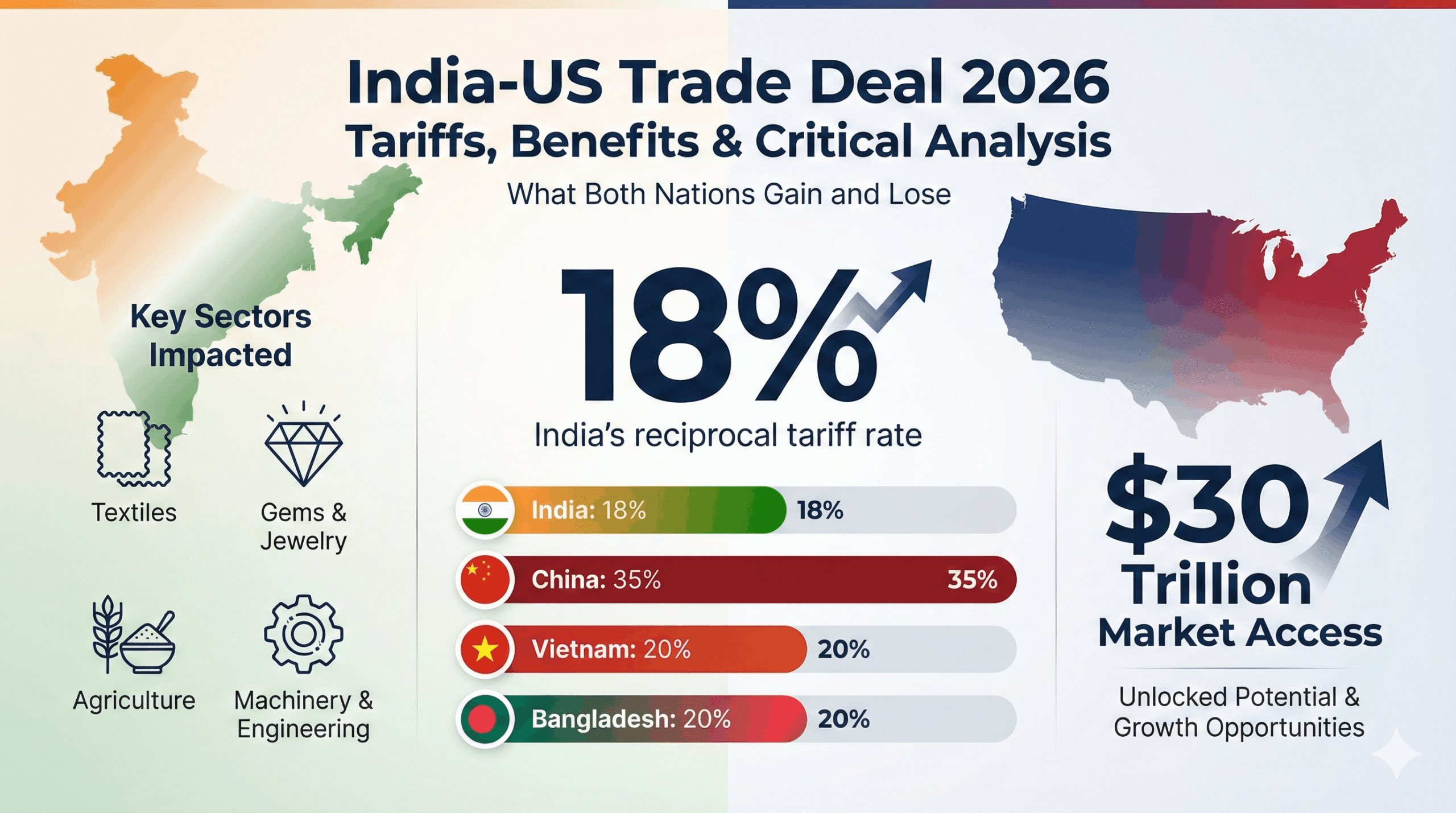
The India-US trade deal cuts tariffs from 50% to 18%, unlocking a $30T market. But what does India and US really gain and lose? A critical analysis.
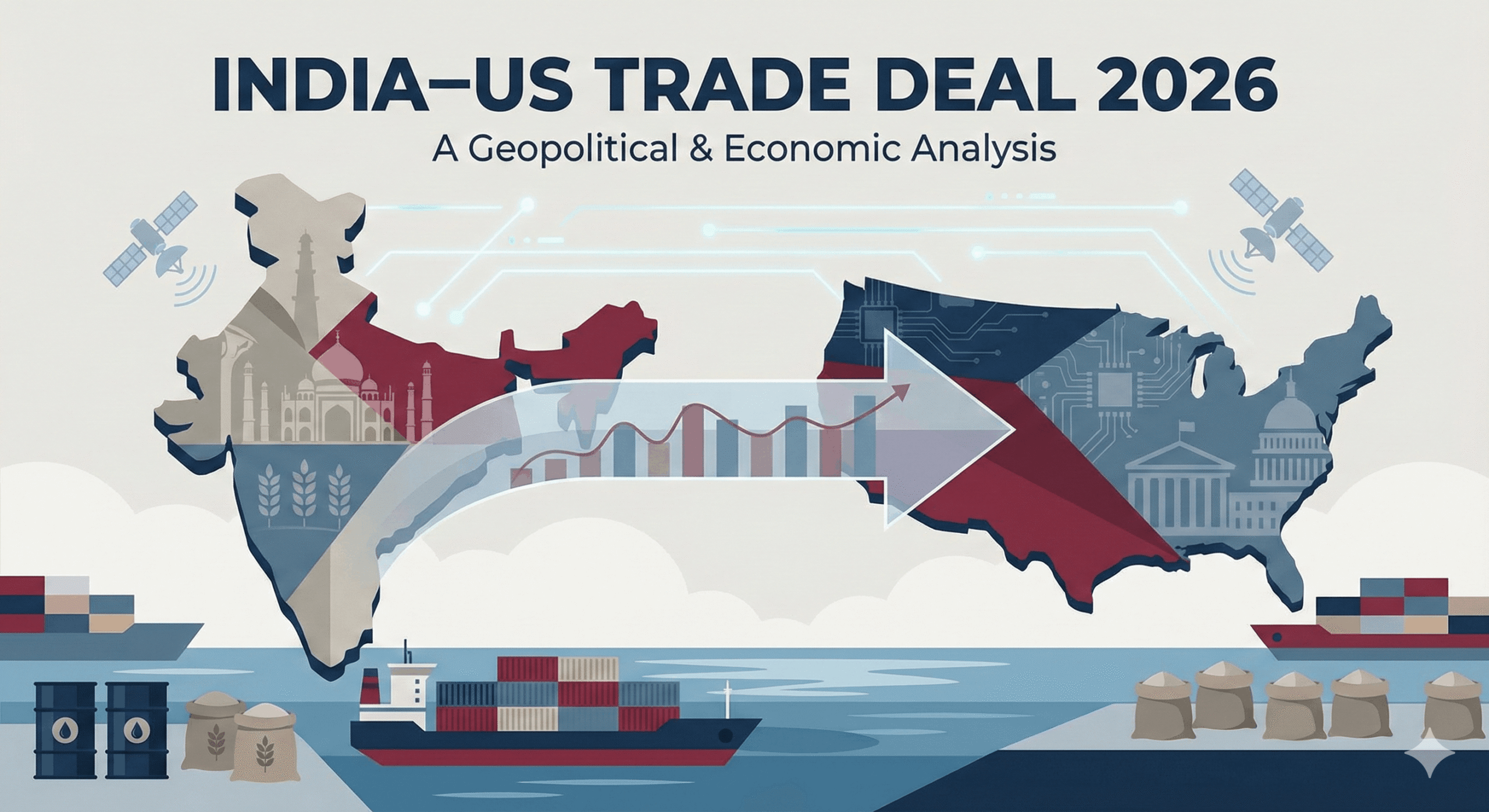
The India–US Trade Deal 2026 marks a dramatic reset in bilateral trade relations. After a year of punitive tariffs and stalled diplomacy, the US has slashed duties on Indian goods from 50% to 18%, while India has pledged major market-opening moves.
This plain-English guide breaks down what was agreed, what’s still unclear, who benefits most, and why this deal could reshape global geopolitics.
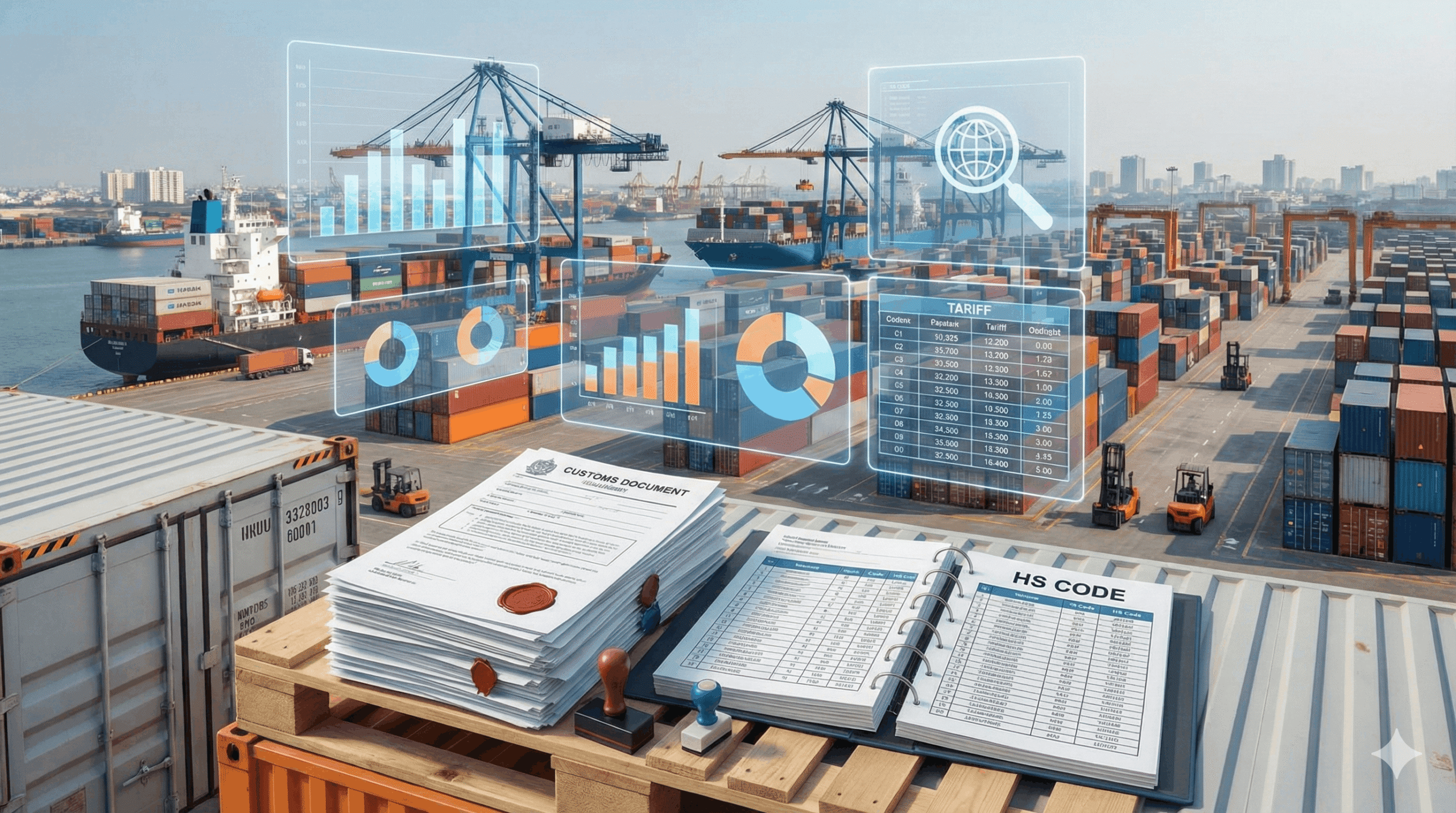
Union Budget 2026–27 introduces major customs reforms including tariffisation of 54+ items, 22 exemption lapses, critical mineral duty cuts, pharma exemptions, export timeline extension, and new Baggage Rules. This in-depth CHA guide explains every customs duty change, effective date, and compliance action importers and exporters must take after Budget 2026.
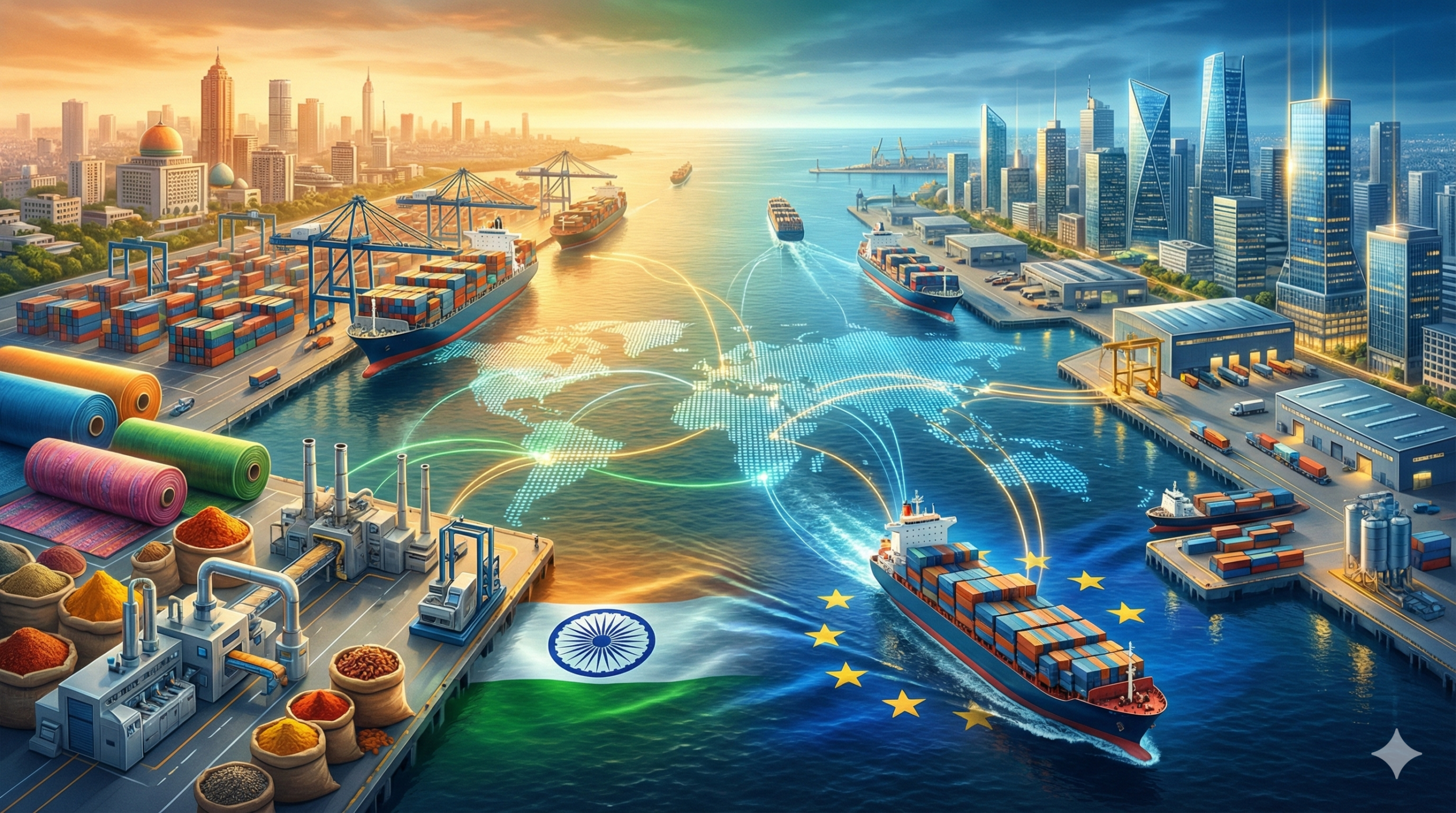
The India-EU Free Trade Agreement announced on January 27, 2026, opens unprecedented opportunities for Indian exporters and businesses. Over 99% of Indian exports will now receive preferential tariff access to European Union markets, covering 450 million consumers across 27 countries.
This comprehensive trade deal provides immediate benefits for labour-intensive sectors including textiles, leather, marine products, gems and jewellery, and handicrafts—totaling $33 billion in exports. Agricultural exporters of tea, coffee, spices, and processed foods will also gain enhanced market access.
Beyond tariff elimination, the FTA streamlines customs procedures, provides a robust mobility framework for Indian professionals, and includes provisions for digital trade, intellectual property protection, and carbon compliance support.
Whether you’re an established exporter, MSME, or exploring international markets for the first time, this guide from Sunshine Cargo Services explains exactly how to leverage the India-EU FTA for business growth.

Finance Minister Nirmala Sitharaman has flagged customs reforms as the government’s next major priority. Here is what the “Next Big Clean-Up” means for importers and the economy ahead of Budget 2025.

Bombay High Court rules customs duty must be refunded if goods aren’t cleared for home consumption. Detailed analysis of the Ajay Industrial Corp verdict (2025).
India has extended its anti-dumping duty on flax fabric from China PR and Hong Kong for another five years. This crucial measure protects domestic textile manufacturers from the continuous threat of unfairly priced imports.

In this blog you will find demonstration with pictures on how you can check bill of entry status on ICEGATE after login.

The Indian government has reduced the import duty on silver bullion to 6% but simultaneously restricted the import of plain silver jewellery (HSN 7113) until March 2026. These changes dramatically impact the price and supply chain for consumers and jewellers.

A new legal battle is underway in India. The Delhi High Court is set to decide if companies can still challenge government-imposed anti-dumping duties at CESTAT.
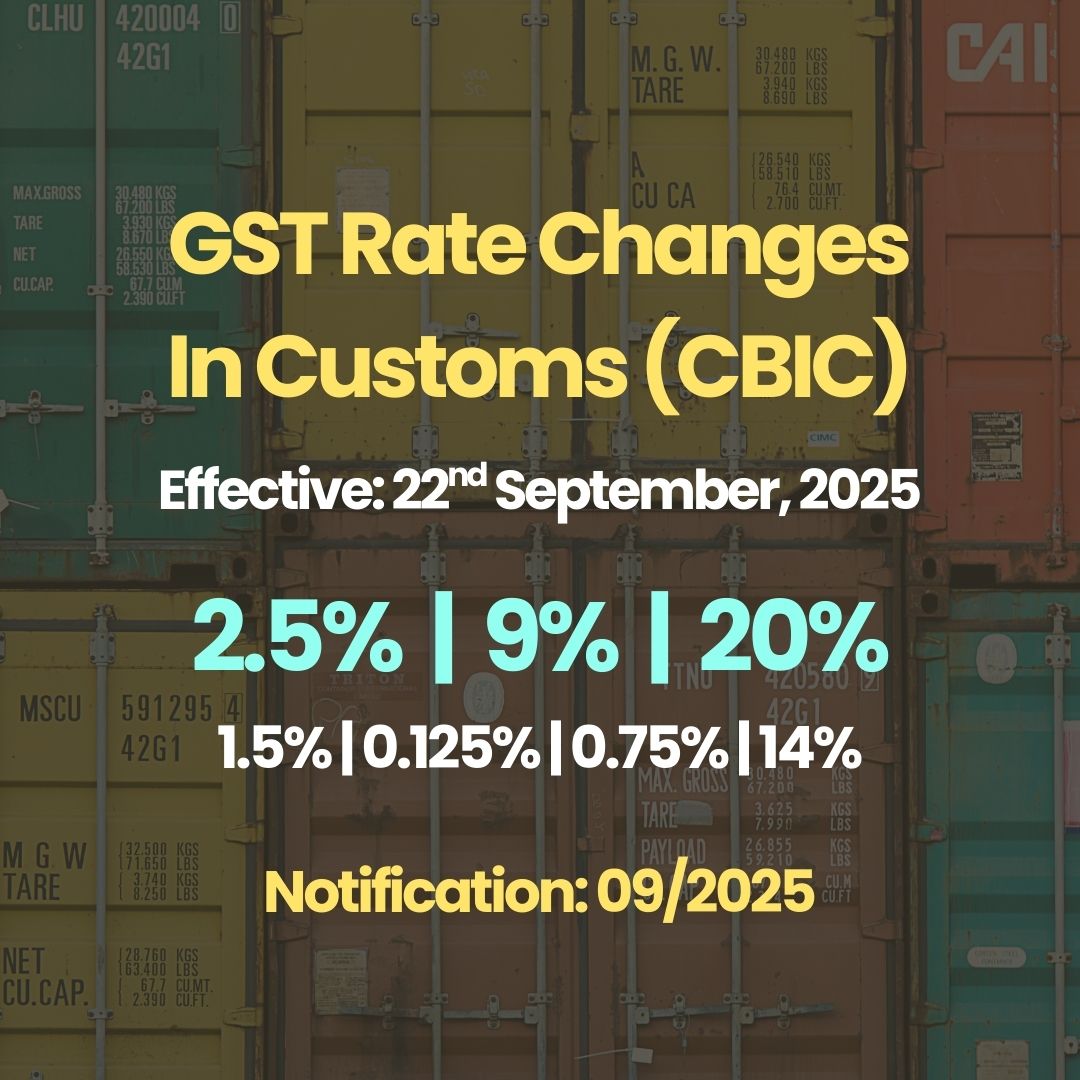
View the new notification from GST Council of India about rate changes in customs under different headings issued on 17th September, 2025. Notification 09/2025
India is opening its automotive market to the world. The government is using reduced duties and new trade deals to attract global firms. This move promises new opportunities and increased competition.

Nepal’s ongoing political turmoil has brought its trade and logistics to a virtual standstill. With key border crossings paralyzed, businesses face significant disruptions and a looming shortage of essential goods.
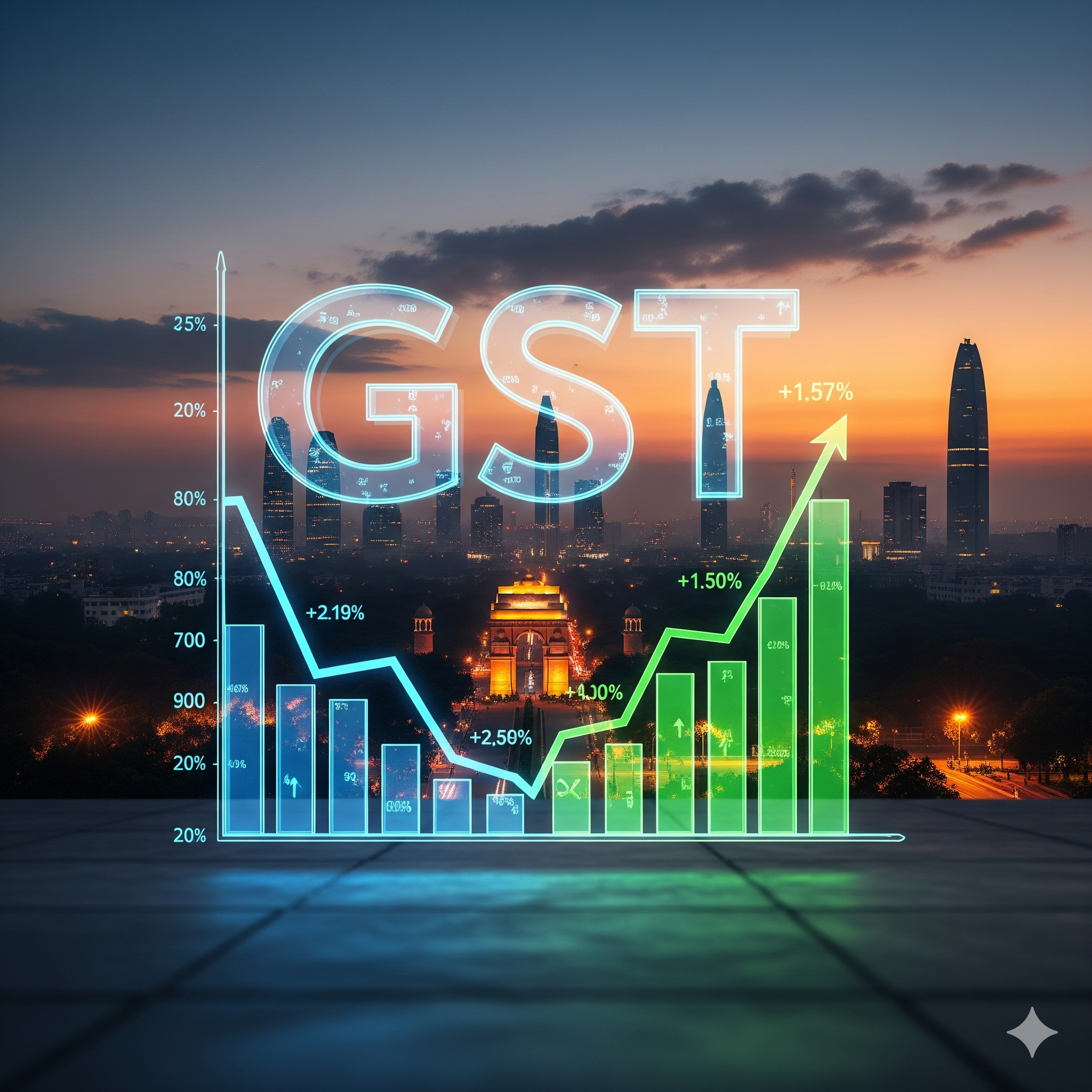
India’s GST Council has approved a new two-rate tax structure, cutting GST on a wide range of goods and services. The reforms are aimed at benefiting the common man and boosting key economic sectors.
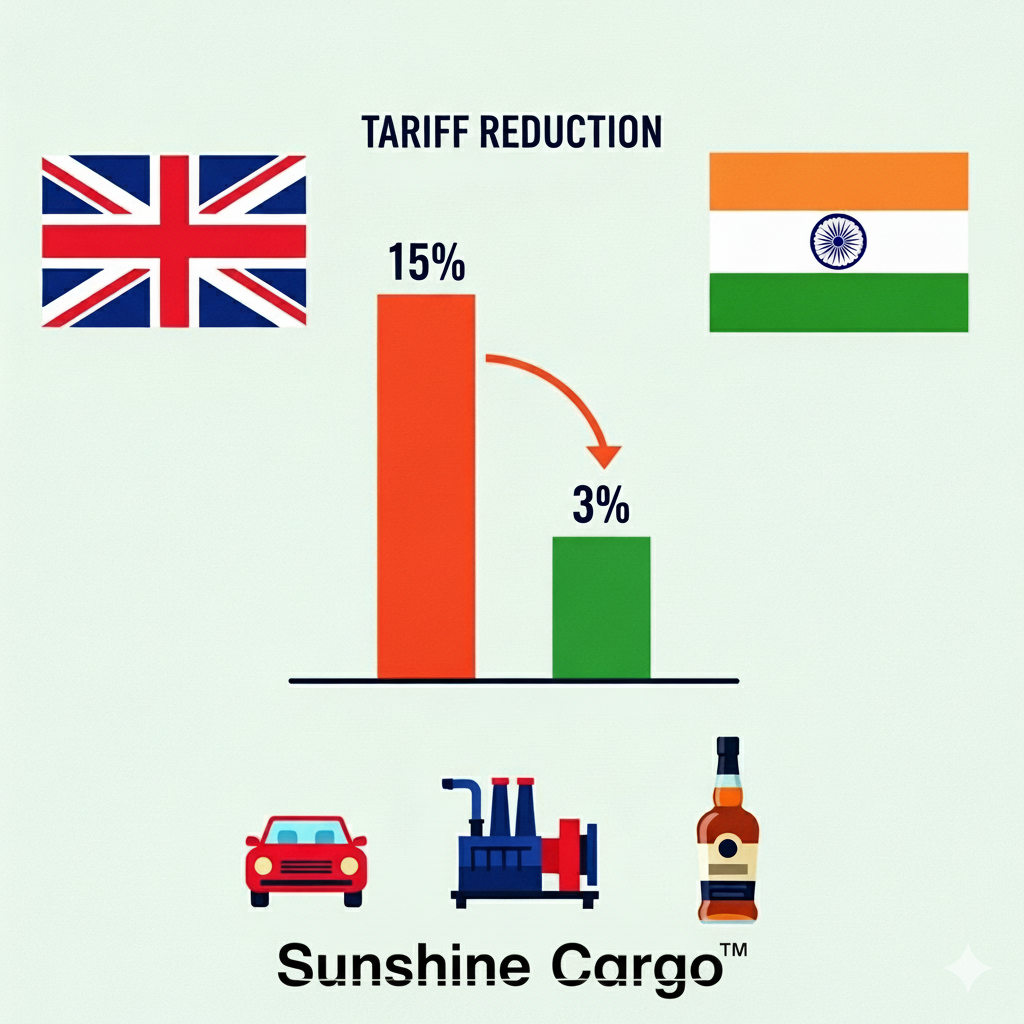
The India-UK FTA will significantly change how goods move between the two countries. This new agreement will cut tariffs and streamline customs, creating new opportunities for Indian import businesses.
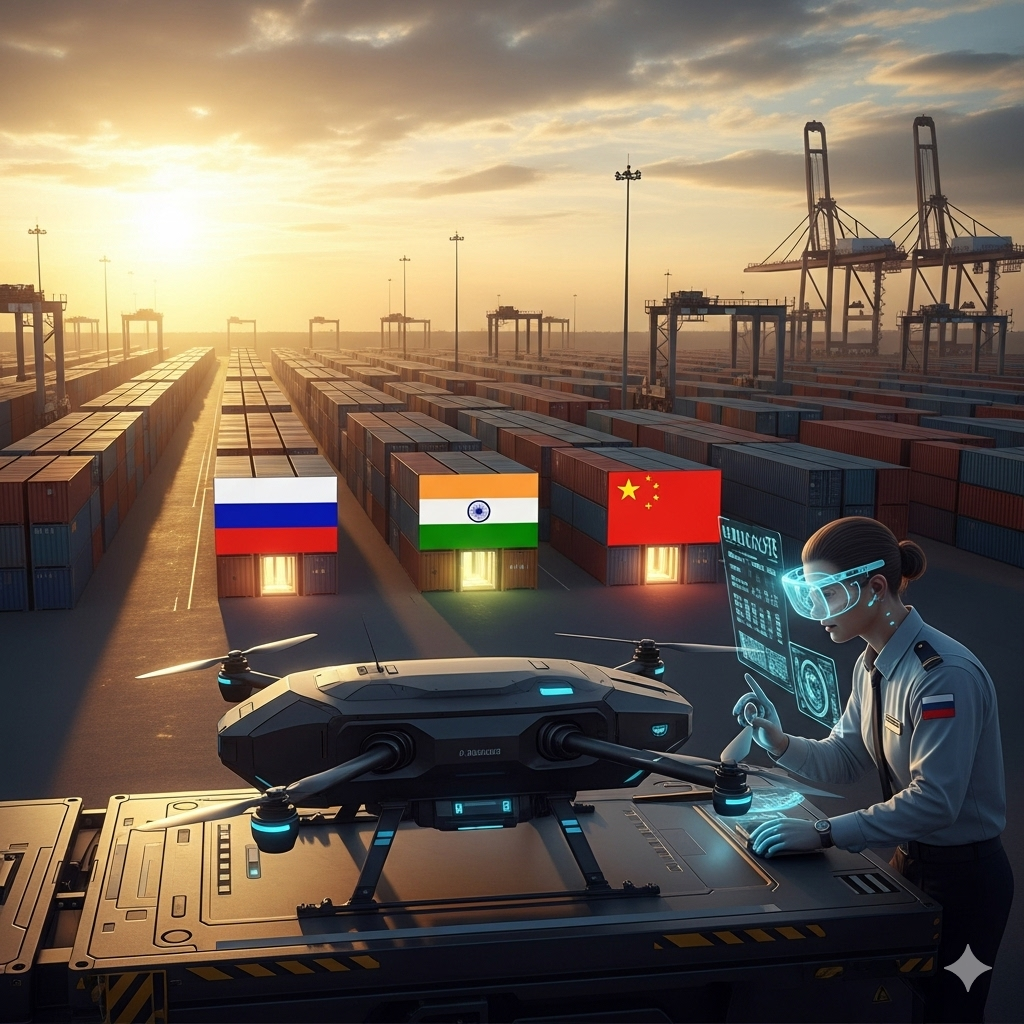
The old world of trade, powered by the US dollar, is giving way to a new multipolar reality. The Russia-India-China (RIC) convergence is at the forefront of this shift, creating new trade corridors and financial systems. This guide explores the practical implications for your business, from managing currency shifts to building a resilient supply chain.
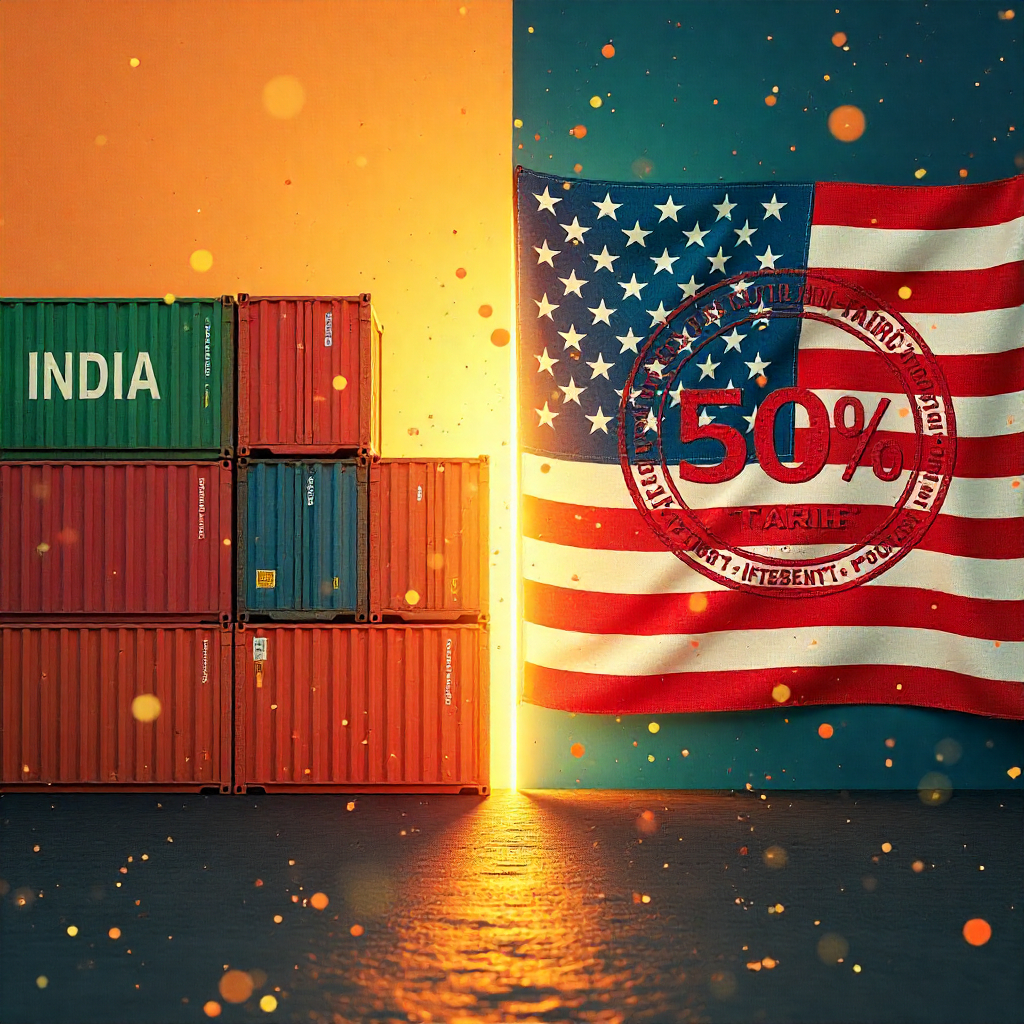
The US has imposed 50% tariffs on key Indian exports starting August 27, 2025. Sectors like textiles, gems, jewellery, leather, furniture, and seafood face steep hikes, while pharma and electronics are exempt. Here’s what it means for India-US trade.

The Confederation of Indian Industry (CII) has outlined a bold reform roadmap for India’s vision of becoming a developed nation by 2047. From simplifying GST and modernizing trade to empowering MSMEs, attracting FDI, and ensuring labour flexibility, the roadmap is a blueprint for transforming India’s economy. This blog breaks down every reform, global comparison, challenges, and the way forward—helping you understand how India plans to achieve the Viksit Bharat 2047 dream.
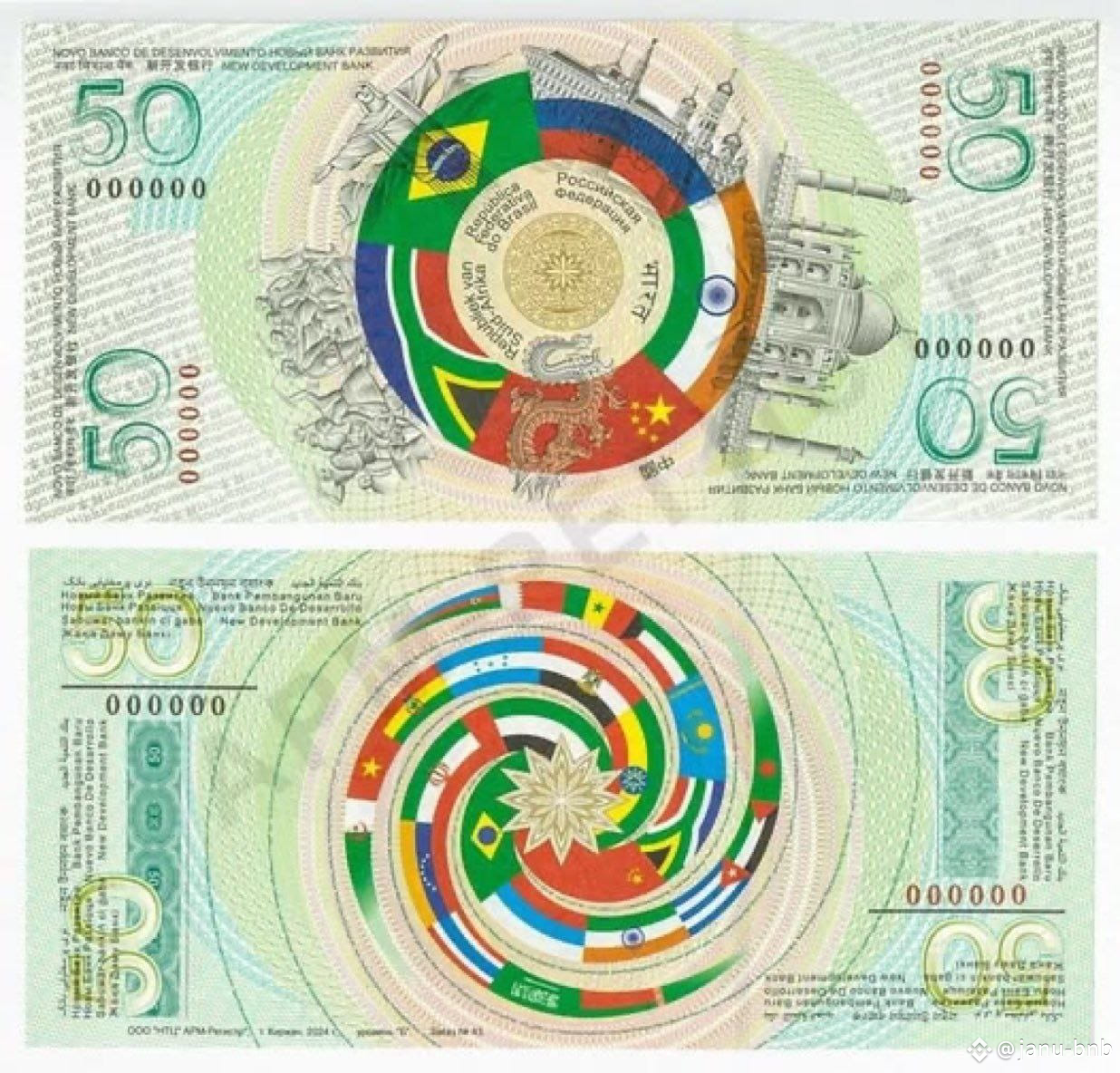
Is BRICS really creating a currency to challenge the US dollar? While the dollar still dominates, BRICS nations are quietly building a parallel financial system through local currency trade. India is at the forefront, expanding rupee settlements for oil and exports. This guide breaks down verified facts, expert quotes, advantages, risks, and FAQs — everything you need to know about BRICS currency vs USD.

The India–Korea Comprehensive Economic Partnership Agreement (CEPA) allows importers to enjoy preferential duty rates on thousands of products ranging from steel and chemicals to electronics and auto parts. This guide explains how CEPA works, its advantages and disadvantages, preferential duty structures, common mistakes to avoid, and FAQs like how to calculate CEPA duty and what documents are required. Perfect for importers, exporters, and businesses looking to leverage trade benefits between India and Korea.
On August 6, 2025, the Reserve Bank of India (RBI) kept the repo rate unchanged at 5.50%. While most headlines focus on how this affects EMIs and home loans, the bigger question for businesses engaged in global trade is—does it impact Indian customs and international shipments?
Trump’s new tariffs on India aren’t just about trade—they reveal deeper battles over energy, economics, and global power. As the U.S. pressures allies and pursues peace talks between Russia and Ukraine, India finds itself at the crossroads of opportunity and risk. This blog unpacks the real reasons behind the tariffs and what they mean for the future of global geopolitics.

This comprehensive guide walks importers, exporters, and customs brokers through the entire process of filing a Customs Transit Declaration (CTD) on ICEGATE. From login and segment-wise form filling to offline utilities and error troubleshooting, it covers everything you need to ensure a successful submission.

Filing imports through Land Customs Stations (LCS) is now easier with ICEGATE 2.0. This complete guide walks importers, CHAs, and custodians through every segment of the LCS Import Webform—from login to final submission—ensuring accuracy, compliance, and a smoother customs process.

This guide explains how authorized users like importers, customs brokers, and SEZ units can respond to Bill of Entry (BE) and Shipping Bill (SB) queries directly through the ICEGATE portal. From logging in to submitting OTP-verified replies, every step is simplified for hassle-free compliance.

This detailed guide explains how to file a BE Amendment through ICEGATE’s Web Form system. From logging in and selecting amendment types to uploading documents and submitting via DSC, it’s everything an importer or CHA needs to know—explained in simple terms.
India’s oil imports from Russia surged post-Ukraine war, but now face major disruption. With the US proposing a 500% tariff on top Russian oil buyers, Indian exporters and importers must brace for potential trade and customs challenges.
The clock is ticking. With Indian trade officials in the US and the July 9 deadline approaching, talks on a long-awaited India–US trade deal are heating up. But agriculture, tariffs, and strategic interests continue to block consensus. Here’s a deep dive into the challenges and what’s at stake for both nations.

From crude oil shocks to shipping delays, the Israel–Iran conflict and the threatened closure of the Strait of Hormuz could deeply disrupt India’s trade flows. Here’s what’s at stake — and how traders, exporters, and customs agents can prepare for what’s next.
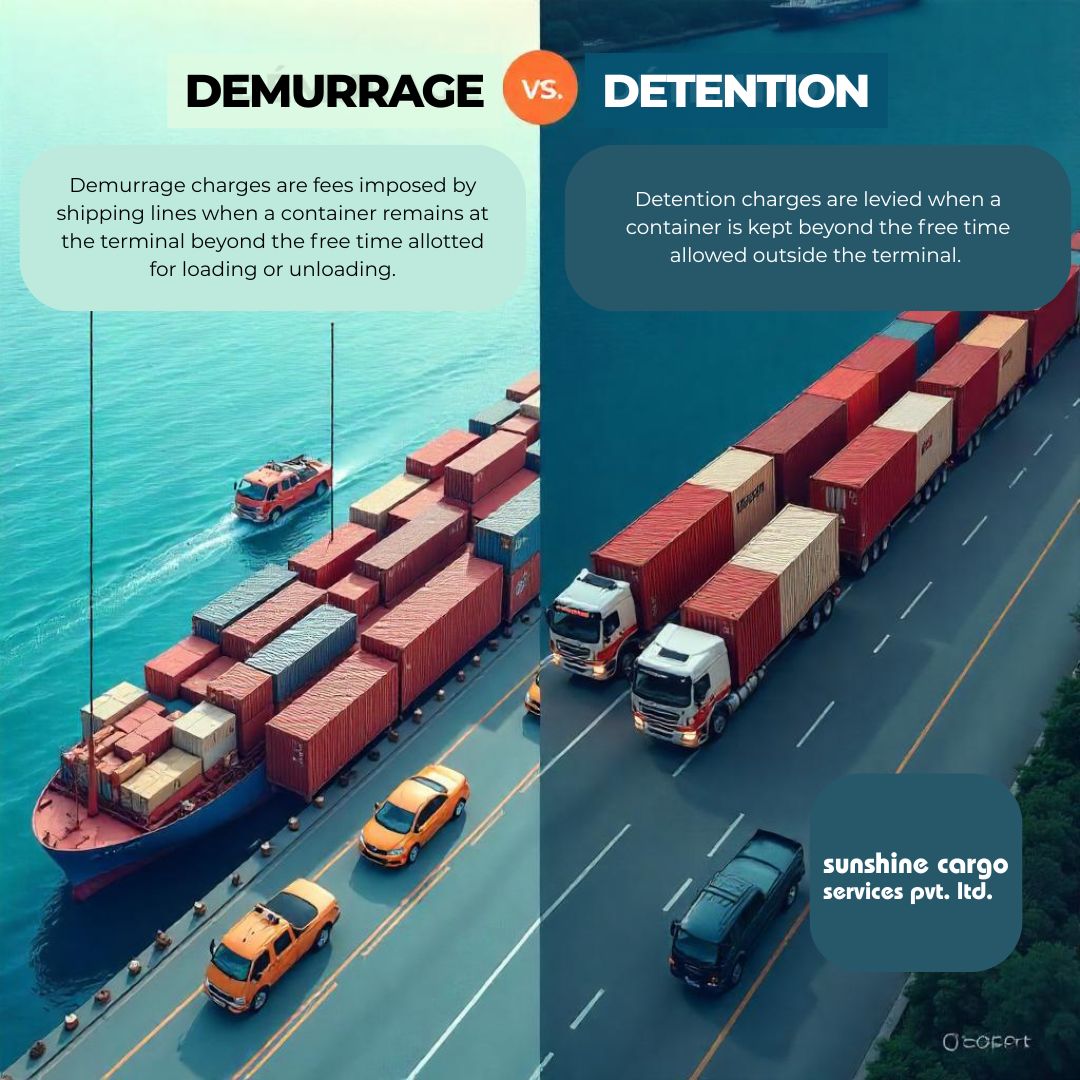
Learn the difference between demurrage and detention charges in container shipping, their causes, and practical tips to avoid these costs while optimizing your logistics operations.