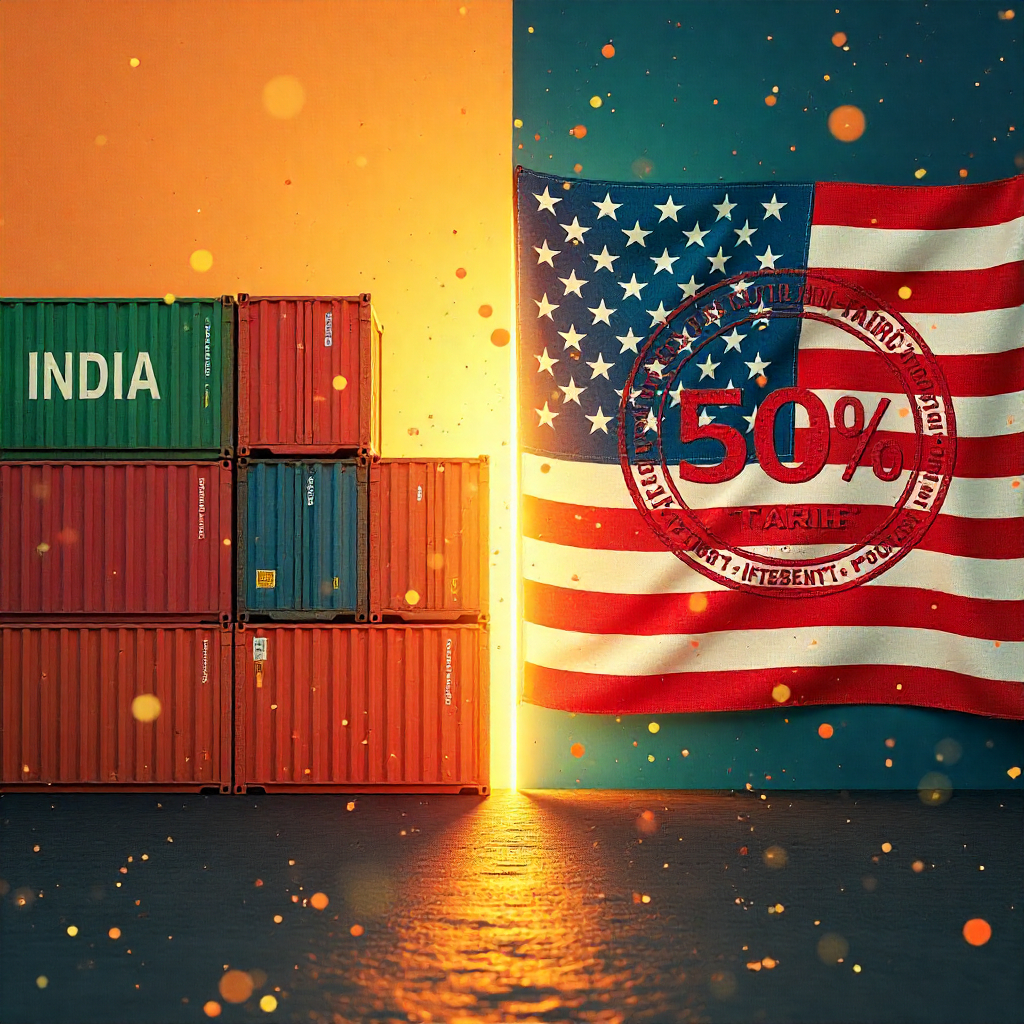
As of August 27, 2025, the United States has doubled tariffs on Indian imports to a staggering 50%, escalating trade tensions and posing major challenges for Indian exporters. In this blog, we unpack what triggered this shift, which products are affected, exceptions, and India’s response strategies.
We’ll cover why the U.S. imposed these tariffs, which imports are caught in the crossfire, real quotes from businesses and government voices, exemptions and compliance deadlines, India’s mitigation moves, plus practical advice and case examples.
Why Did the U.S. Double Tariffs on Indian Imports?
The U.S. imposed a second 25% surcharge—bringing total tariffs to 50%—as a punitive measure linked to India’s continued purchase of discounted Russian oil. The Trump administration framed this as both a national security response and a trade pressure tool.
The Executive Order (EO) 14329, signed by former President Donald Trump, mandated the extra 25% tariff starting 12:01 a.m. EDT, August 27, 2025 (Economic Times, Reuters, India Briefing).
The first 25% tariff earlier this month was explained as part of “reciprocal tariffs.” But this second surcharge explicitly targets India’s oil purchases from Russia (Reuters, The Guardian).
According to Politico, this represents a “low point” in U.S.–India relations, raising questions about whether broader cooperation in defense and trade will be undermined (Politico).
Which Indian Exports Are Affected by the 50% Tariff?
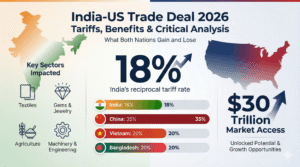
Around 55% of India’s exports to the U.S.—covering textiles, gems, jewellery, footwear, furniture, chemicals, machinery, and marine products—are now subject to the full 50% duty.
Main impacted sectors include:
1. Textiles & Apparel
-
India is one of the largest exporters of textiles to the U.S. – including cotton garments, synthetic fabrics, home textiles (like bed sheets and towels), and readymade apparel.
-
These account for a significant share of India’s overall exports to the U.S.
-
A 50% tariff will make Indian textile products much more expensive for American buyers, giving competitors like Bangladesh, Vietnam, and Mexico a strong edge.
2. Gems & Jewellery
-
Diamonds, gold jewellery, and polished stones are among India’s top export items to the U.S.
-
The tariff will directly impact diamond polishing units in Surat and jewellery hubs like Mumbai and Jaipur.
-
With the U.S. being the largest consumer market for gems and jewellery, this could hit India’s $10+ billion jewellery export industry hard.
3. Leather & Footwear
-
India exports leather shoes, handbags, wallets, and belts to the U.S.
-
With a 50% tariff, Indian leather goods become less competitive compared to China, Vietnam, and Italy.
-
Small and medium-scale manufacturers in Kanpur, Agra, and Tamil Nadu will face strong pressure.
4. Machinery & Engineering Goods
-
This includes industrial machinery, electrical equipment, pumps, engines, and auto parts.
-
India has been growing as a supplier of specialized machinery to the U.S., but tariffs will reduce demand and push American companies to source from other countries.
5. Furniture & Wood Products
-
Indian exporters of wooden furniture, handicrafts, and home décor items will now see their goods priced higher in the U.S. market.
-
This could affect artisans and exporters in Rajasthan, Kerala, and Uttar Pradesh, where furniture exports are concentrated.
6. Marine & Seafood Products
-
Shrimp, frozen fish, and other seafood are major Indian exports to the U.S.
-
A 50% tariff makes Indian seafood far less competitive compared to Ecuador, Thailand, and Indonesia.
-
This will especially hurt seafood exporters in Andhra Pradesh, Kerala, and Gujarat.
7. Other Categories
-
-
Handicrafts, carpets, ceramics, and some processed foods are also likely to face reduced competitiveness.
-
India’s traditional export advantage in these sectors will weaken in the U.S. market.
-
Reuters estimates 55% of $87 billion in Indian exports are now covered, with volumes expected to drop significantly. The Economic Times highlights shrimp and chemicals among the worst-hit categories.
The Global Trade Research Initiative (GTRI) projects exports to the U.S. could fall by 40–45%, dropping from $87 billion in 2024–25 to about $49.6 billion in 2025–26 (Indian Express).
Export hubs like Tirupur, Noida, and Surat have already paused production, according to the Federation of Indian Export Organisations (FIEO) (Reuters).
Are Any Sectors or Shipments Exempt from US Tariffs on India?
Yes, not all Indian exports are affected.
Explicit exemptions include:
-
Pharmaceuticals and electronics (including semiconductors and IT hardware) (AP News, US News).
-
In-transit cargo loaded before Aug 27 and cleared by Sept 17, 2025, under tariff code HTSUS 9903.01.85 (Reuters, India Briefing, TaxTMI).
-
Steel, aluminum products, passenger vehicles, humanitarian aid, and informational materials (Reuters).
Exporters can claim exemption by proving shipment dates and correct customs classification under HTSUS 9903.01.85.
What Are the Reactions from India’s Businesses & Officials?
Businesses and officials have been vocal about the impact.
S.C. Ralhan, President of FIEO, stated:
“The move will disrupt Indian exports… about 55% of exports—including textiles, chemicals, and leather—will face a 30–35% price disadvantage.”
— Reuters, The Indian Express
He further urged the government to offer loan moratoriums, low-cost credit, and easier financing for exporters (Reuters).
Export hubs such as Tirupur (textiles), Surat (gems), and coastal Andhra (shrimp) are already seeing halted production (Indian Express).
A senior Commerce Ministry official told Reuters that India is encouraging exporters to diversify markets to Latin America, the Middle East, and Africa, while preparing domestic aid packages.
External Affairs Minister S. Jaishankar, while in Moscow, criticized the U.S. decision as “unjustified and unreasonable,” pointing out that China continues to import Russian oil without equivalent penalties (Indian Express).
Politico suggests this tariff escalation may weaken Quad cooperation and Indo-Pacific strategy alignment (Politico).
Practical Impacts & Case Examples
On the ground, the tariffs are biting quickly.
-
Textiles (Tirupur): factories have closed temporarily as costs make U.S. markets unviable (Reuters).
-
Shrimp exporters: face collapse of nearly 40% of the sector due to U.S. market barriers (Indian Express).
-
Jewellery units (Surat, Jaipur): report a 30–35% competitive disadvantage compared to Southeast Asian suppliers (Reuters).
Case Example – Surat apparel exporter:
Pre-tariff, the company sold t-shirts in the U.S. for $5/unit. With 50% duties, landed cost rose to about $7.50/unit, pricing them out of the U.S. market. They are now exploring new buyers in the Middle East and Africa.
What Should Indian Exporters Do Now?
Indian businesses need immediate coping strategies:
| Strategy | What to Do |
|---|---|
| Transit Exemption | Ensure pre-Aug 27 shipments clear by Sept 17 with HTSUS 9903.01.85. |
| Diversify Markets | Target Latin America, Africa, Middle East, Southeast Asia. |
| Financial Support | Tap into FIEO and Commerce Ministry schemes for credit and aid. |
| Adjust Pricing | Share cost burdens, pivot to exempt categories like pharma & electronics. |
| Monitor Policy | Track developments at UNGA, WTO, Quad negotiations. |
Exporters can also study customs solutions, including easing documentation bottlenecks. For deeper insights, see guides like Overcoming supply chain bottlenecks in customs clearance or India–US tariffs explained.
Additional resources:
Conclusion
The U.S. decision to double tariffs on Indian imports to 50% marks one of the most significant trade escalations in recent history. Over 55% of India’s $87 billion U.S. exports are now affected—particularly in textiles, gems, leather, chemicals, and seafood.
While exemptions offer limited breathing room, exporters must move fast: claim transit exemptions, diversify markets, seek credit support, and pivot where possible.
As Indian officials work on diplomatic and economic strategies, businesses that adapt quickly—through innovation, resilience, and market diversification—will be the ones to weather this storm and emerge stronger.