Common Mistakes Importers Make During Tariff Changes
Mistake: Filing bills of entry without checking ICEGATE updates.
Fix: Always verify the live tariff rate on the official portal.
Mistake: Ignoring changes to the AIDC cess component.
Fix: The five percent cess is mandatory; factor it in fully.
Mistake: Undervaluing invoices to offset the high tax hike.
Fix: Customs will seize undervalued cargo. Declare true transaction value strictly.
Mistake: Forgetting to utilize export promotion capital schemes.
Fix: Consult your CHA to explore Advance Authorization benefits immediately.
Mistake: Assuming old tariff codes apply to all new shipments.
Fix: Review Chapter 71 classifications carefully for any subtle descriptive changes.
Frequently Asked Questions (FAQs)
1. What is the new effective gold import duty today?
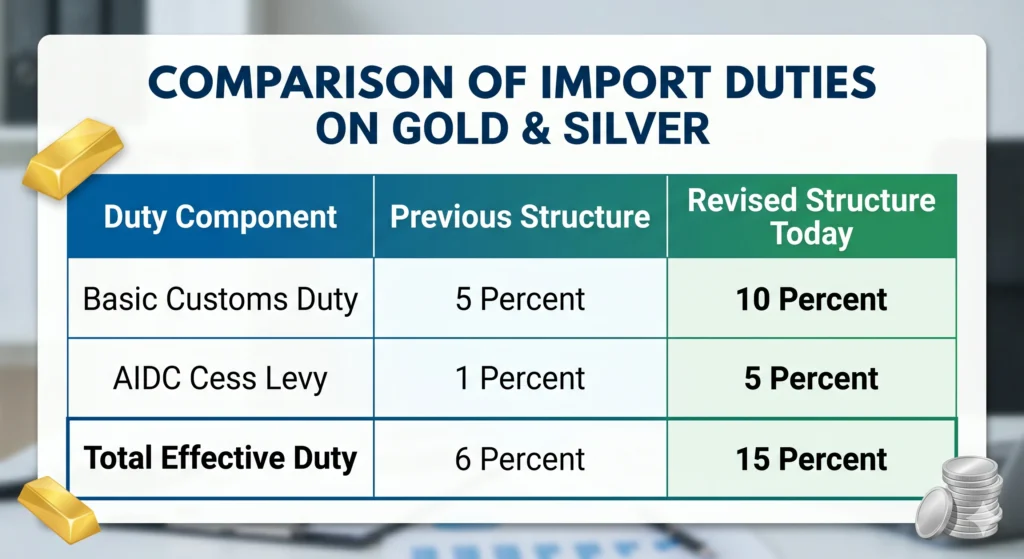
Snippet: The current effective import duty on gold and silver is 15 percent. This strictly includes a ten percent basic duty and five percent cess.
Answer: The Finance Ministry officially revised these specific tax rates today. They increased the basic customs duty to a full ten percent. The Agriculture Infrastructure and Development Cess also sits at five percent. Combining these components pushes the total effective import tax to 15 percent. This strict hike applies to raw gold, silver, and precious metal findings. The high rate makes importing physical bullion a very expensive endeavor.
2. Why did India increase the silver import duty?
Snippet: India aggressively increased the silver duty to curb surging domestic imports. This protects shrinking foreign exchange reserves amid the West Asia crisis.
Answer: India remains one of the world’s absolute largest importers of silver. Massive silver imports continuously drain US dollars from the national economy. The current account deficit faces severe pressure from rising global oil prices. The government desperately needs to conserve dollars to pay for essential fuel. Raising the duty on silver strongly discourages non-essential domestic buying. This strategic policy helps stabilize the Indian rupee against the US dollar.
3. When did these new customs notifications take effect?
Snippet: The new duty structures came into legal force on May 13, 2026. Any bill of entry filed today attracts the 15 percent rate.
Answer: The Central Board of Indirect Taxes and Customs published the rules yesterday. Notification No. 15/2026-Customs and No. 16/2026-Customs dictate the new rates clearly. The changes legally took effect at midnight on May 13, 2026. All uncleared shipments currently sitting at ports face the new duty structure. Importers cannot claim the old six percent rate for pending clearances. You must pay the revised amount to release your precious metal cargo.
4. Can exporters get a refund on this 15% duty?
Snippet: Yes, registered exporters can utilize official duty drawback schemes effectively. You receive a refund after successfully exporting the final manufactured jewelry.
Answer: The government wants to tax domestic consumption, not international export activities. They offer robust drawback schemes for manufacturers who export finished goods. You pay the 15 percent import duty upfront during initial customs clearance. Once you export the jewelry, you file a comprehensive drawback claim. Customs verifies your export documents and refunds the eligible duty amount directly. Your CHA will ensure all shipping bills clearly mention the drawback claim.
5. How does Advance Authorization help jewelry importers now?
Snippet: Advance Authorization permits duty-free raw material imports strictly for export production. This saves companies from paying the massive 15 percent upfront tax.
Answer: This scheme is a massive lifeline for jewelry manufacturers right now. It prevents your working capital from being blocked by high import taxes. You obtain a license from the Directorate General of Foreign Trade. This license allows you to import specific quantities of gold completely duty-free. However, you are legally bound to export the finished products subsequently. Failing to meet this export obligation results in severe financial penalties later.
6. Is the 3% IGST still applicable on gold imports?
Snippet: Yes, the three percent Integrated Goods and Services Tax remains applicable. Importers must pay this IGST on the total assessed cargo value.
Answer: The import duty and the IGST are two entirely different tax mechanisms. The 15 percent import duty acts as a strict border control measure. You must also pay the standard three percent IGST during customs clearance. Customs calculates this IGST on the value inclusive of the basic duty. This compounding effect makes the absolute landed cost of bullion incredibly high. Input tax credit is available for the IGST portion for registered businesses.
7. How does the West Asia crisis affect Indian gold imports?
Snippet: The crisis disrupts oil shipments, forcing India to spend more dollars. This triggers strict restrictions on non-essential imports like physical gold bullion.
Deep Answer: India imports a massive amount of crude oil for its energy needs. The geopolitical conflict threatens vital shipping lanes continuously in West Asia. Global crude prices spiked drastically due to these severe international supply fears. India had to dip heavily into its foreign exchange reserves to cover costs. To stop the rapid depletion of dollars, the government discouraged gold imports. Gold is correctly considered a non-essential import compared to critical crude oil.
8. What is the Agriculture Infrastructure and Development Cess?
Snippet: The AIDC is a specific mandatory tax levied on various imports. The government heavily utilizes these funds to build vital agricultural infrastructure.
Answer: The Indian government introduced this specific cess a few years ago. It strictly aims to generate dedicated funds for the vital farming sector. While the basic customs duty on gold fluctuates, the AIDC remains steady. Currently, the AIDC on gold and silver imports stands at five percent. This ensures that even if customs duties drop, infrastructure funding continues uninterrupted. It remains a mandatory component of the total 15 percent import tariff.
9. Are spent catalysts containing precious metals taxed differently now?
Snippet: Yes, a new tariff entry specifically targets spent catalyst ash imports. These items now attract a flat ten percent basic customs duty.
Answer: Notification No. 15/2026-Customs introduced a specific new classification entry today. It covers spent catalysts or ash containing recoverable precious metals inside. Previously, these might have fallen under a generic five percent concession rate. Now, they strictly attract a ten percent basic customs duty upon entry. This specific rate is valid until March 31, 2027, per the notification. Importers of industrial catalysts must update their HSN code mapping immediately.
10. What happens if I misdeclare the value of imported gold?
Snippet: Misdeclaring cargo value to avoid high taxes is a serious customs offense. Authorities will seize the shipment and impose heavy legal financial penalties.
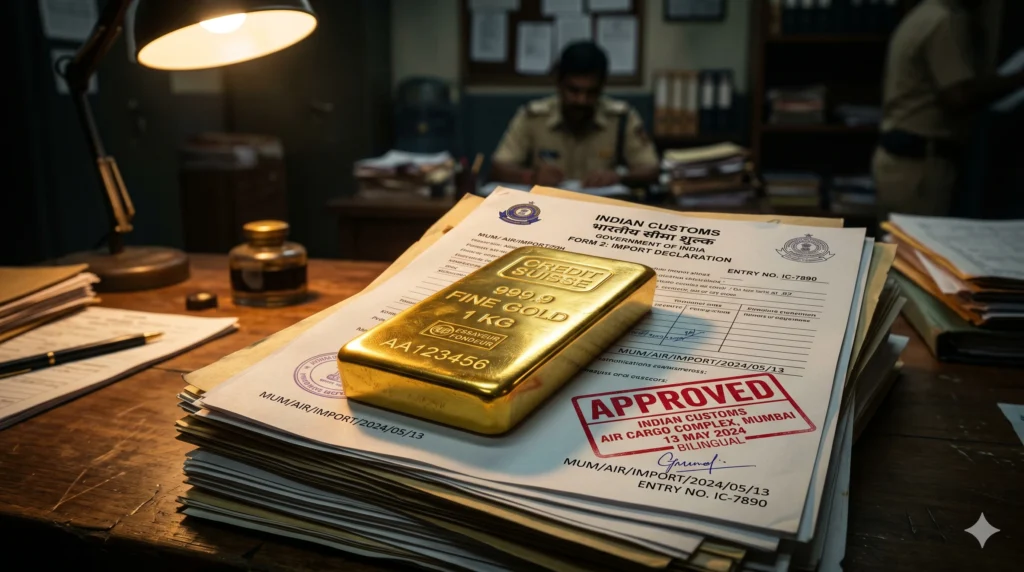
Answer: With the duty jumping to 15 percent, the temptation to undervalue exists. However, customs uses advanced AI risk-assessment tools to flag suspicious commercial invoices. If officers suspect deliberate undervaluation, they will order a detailed physical examination. They can reassess the value based on prevailing international bullion market rates. You will face cargo confiscation, massive demurrage charges, and severe legal prosecution. Always declare the absolute true transaction value to your customs house agent.
Conclusion
The 15 percent import duty is a harsh reality for importers today. It completely changes the financial landscape for Indian bullion supply chains.
You must optimize your clearance strategies and utilize export promotion schemes immediately. We are here to ensure your shipments clear without costly delays.
Sources & Backlinks
Gold gets costlier: Why govt raised import duty and what changes for buyers — Times of India — May 13, 2026
Government raises gold and silver tariffs to 15% to curb imports, support rupee — The Hindu — May 13, 2026
Centre raises gold, silver import duties to 15% amid West Asia turmoil — Hindustan Times — May 13, 2026
Government Revises Customs Duty Structure on Gold, Silver and Precious Metals Imports — A2Z Taxcorp — May 13, 2026