Written By Akash Gupta | Content Manager, Sunshine Cargo
Kolkata, West Bengal, India — September 4th, 2025
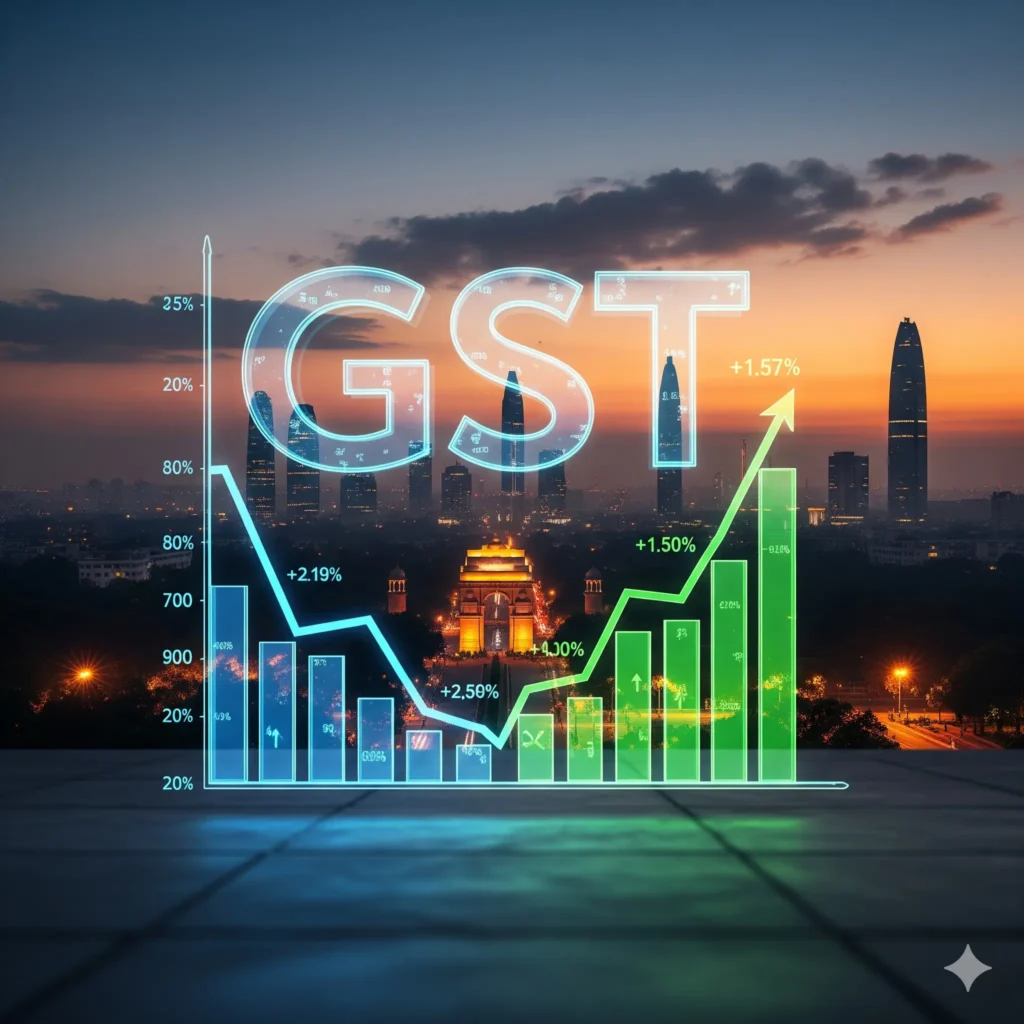
The 56th Goods and Services Tax (GST) Council meeting, led by Union Finance Minister Nirmala Sitharaman, has ushered in a new era of tax reforms. This “next-generation GST reform” is designed to improve the lives of citizens and boost the Indian economy.
It follows an announcement by Prime Minister Narendra Modi on August 15, 2025. The changes focus on making essential goods and services more affordable while simplifying trade processes.
Wanna let us handle your imports while you manage your business? With 40+ years in this business, we can do it with ease! Contact us today!
Key Takeaways
-
The GST Council has rationalized the current four-tiered tax structure into a simpler two-rate model with 18% (Standard) and 5% (Merit) rates.
-
Significant rate reductions have been approved for a wide range of goods, including food items, household essentials, and healthcare products, benefiting the common man and key sectors like agriculture and manufacturing.
-
Key procedural reforms, such as the operationalization of the Goods and Services Tax Appellate Tribunal (GSTAT) and a simplified GST registration scheme, are set to enhance the ease of doing business.
What is the Next-Gen GST Reform?
In short: The Next-Gen GST Reform is a major overhaul of India’s tax system, simplifying the existing four-tier structure into a two-rate model to lower taxes on essential goods and services for citizens.
The reform is a strategic move to rationalize India’s Goods and Services Tax framework. It aims to reduce the tax burden on everyday items and stimulate economic growth. The new structure introduces a Standard Rate of 18% and a Merit Rate of 5%.
A special de-merit rate of 40% will apply to a few select goods and services. This dual-rate system is expected to make tax compliance more straightforward and transparent for businesses and consumers alike.
How This GST Change Will Affect Indian Trade
In short: These GST changes will simplify logistics and lower costs, directly impacting customs and international trade by making Indian goods more competitive on the global market.
The GST Council’s decisions have far-reaching implications for Indian trade and customs. By reducing tax rates on a broad spectrum of goods, from agricultural machinery to consumer electronics, the government is making a clear push to lower production costs. This, in turn, makes Indian-made products more competitive internationally.
The reduction of the GST rate on cement from 28% to 18% is a huge win for the construction sector, a key driver of the economy. The uniform 18% rate on all auto parts, irrespective of their HS code, will simplify the supply chain and reduce logistical friction for the automotive industry.
For exporters, the new provisional refund system for inverted duty structure and zero-rated supplies will be a major game-changer. The Central Board of Indirect Taxes and Customs (CBIC) will administratively start implementing a revised system for granting a 90% provisional refund.
This will ease cash flow for exporters, who often face delays in getting their refunds. This is especially important for small exporters who ship goods through courier or postal services, as the threshold limit for refunds has been removed.
Three Pillars to Boost Trade and Simplify Compliance
1. Rate Rationalization for Goods
In short: The GST Council is slashing taxes on a huge list of goods, from food and healthcare to automobiles and defense.
The rate cuts are extensive. For example, the GST on essential food items like butter, ghee, coffee, and chocolates has been reduced from 12% or 18% to just 5%. Similarly, everyday household items such as shampoo, hair oil, toothpaste, and soap will now attract a 5% GST instead of 18%.
In the defense sector, the GST on unmanned aircrafts and military transport aircraft has been cut from 28%/18% to a flat 5%. This will help reduce procurement costs for the defense sector, a critical area for national security. The Council also granted an ad hoc IGST and compensation cess exemption on a new armored sedan car for the President’s Secretariat.
2. Streamlining Services and Sectoral Reforms
In short: The GST Council is making services like healthcare, beauty, and transport cheaper while correcting tax anomalies in other sectors.
In a move to benefit the common man, the GST on individual health and life insurance policies has been completely exempted. This will make insurance more affordable and increase its penetration across the country. Beauty and physical well-being services like salons, gyms, and yoga centers will now be taxed at 5% instead of 18%.
The Council also corrected the long-pending inverted duty structure for the manmade textile and fertilizer sectors by reducing GST rates. For instance, the rate on manmade fiber has been brought down from 18% to 5%, and on sulfuric acid from 18% to 5%.
3. Procedural Changes for Ease of Doing Business
In short: New rules will speed up refunds, simplify registration, and create a new tribunal for faster dispute resolution.
The GST Council is implementing several procedural reforms to make life easier for businesses. They have approved a simplified GST registration scheme for small and low-risk businesses. Under this scheme, registration can be granted on an automated basis within three working days.
The Council also recommended the operationalization of the Goods and Services Tax Appellate Tribunal (GSTAT) for accepting appeals before the end of September. This tribunal will provide a robust mechanism for resolving disputes, which is a major concern for many businesses.
Example: A manufacturer of consumer electronics, previously paying 28% GST on air conditioners, now benefits from the new 18% rate. This company, let’s call it “CoolAir Solutions,” can now reduce its end-consumer price, making its products more competitive against imported brands. This GST change could increase its sales by up to 20% in the next quarter.
Tools and Resources
To navigate these changes, businesses can rely on various tools and resources. The GST Portal is the official source for filing returns and applying for refunds. Services from major accounting firms like KPMG and Deloitte offer detailed analysis and compliance assistance. For small businesses, free online tools for HSN code lookups and GST calculators can be invaluable.
To simplify the import-export process and avoid common errors, consider using platforms like ICEGATE to file your customs documentation. Need help with filing? Learn how to file a customs transit declaration (CTD) on ICEGATE here: [How to file a Customs Transit Declaration (CTD) on ICEGATE].
Case Study: The Impact on Indian Startups
The new tax cuts on essentials are expected to have a cascading effect on the wider economy, especially for startups. Let’s look at a food delivery startup, “QuickBites.” Before the reform, QuickBites paid 12% GST on many of the processed foods it supplied. Under the new regime, the GST on a wide range of items, including sauces, pasta, and packaged snacks, has been slashed to 5%.
“This GST rate reduction is a fantastic move for us,” says Anjali Sharma, CFO of QuickBites. “It lowers our procurement costs directly, allowing us to either pass on the savings to our customers or invest in expanding our delivery network. It’s a win-win.”
This case highlights how tax rationalization can directly support the growth of new businesses, encouraging innovation and creating new jobs.
Common Mistakes to Avoid
-
Not updating accounting software: Failing to update your ERP or accounting system with the new rates can lead to incorrect invoicing and compliance issues.
-
Ignoring procedural changes: Businesses, especially exporters, might miss out on the benefits of faster refunds if they aren’t aware of the new provisional refund system.
-
Assuming all items are covered: While the list of rate cuts is extensive, some goods have seen an increase or no change. Always verify the specific Harmonized System of Nomenclature (HSN) code for your products.
FAQs
What is the new two-rate GST structure?
The new two-rate GST structure is a simplified tax system approved by the GST Council with a Standard Rate of 18% for most goods and services and a Merit Rate of 5% for essential items.
The government aims to streamline the tax system by replacing the existing multiple slabs (5%, 12%, 18%, 28%) with just two primary rates, which should reduce classification disputes and make compliance easier for businesses. A special de-merit rate of 40% has also been introduced for luxury goods and sin items, such as pan masala and certain vehicles.
How do the GST changes affect common household items?
Many household items will become cheaper as their GST rate has been reduced from 18% to 5%, including shampoo, soap, toothpaste, hair oil, and shaving cream.
This is part of the government’s plan to provide relief to the common man and aspirational middle class by making daily essentials more affordable. The move is expected to boost consumption and provide a much-needed push to the consumer goods sector.
What is the Goods and Services Tax Appellate Tribunal (GSTAT)?
The GSTAT is a tribunal that will be made operational to handle GST-related appeals, providing a faster and more consistent dispute resolution mechanism for taxpayers.
The GST Council has recommended that the GSTAT begin accepting appeals by the end of September and start hearings by the end of December. This is a crucial step toward enhancing the institutional framework of GST and ensuring greater certainty for businesses, which have long been demanding a dedicated body for resolving tax disputes.
How will the new GST reforms impact Indian exporters?
Indian exporters will benefit from faster provisional refunds on zero-rated supplies and inverted duty structures, and the removal of the threshold limit for refunds on low-value export consignments.
These measures are designed to improve cash flow for exporters and encourage international trade. The administrative implementation of 90% provisional refunds by the CBIC will significantly reduce the time businesses have to wait to get their money back, making exports more viable and attractive.
What about the GST rates for pan masala and cigarettes?
The GST on pan masala, gutkha, chewing tobacco, and cigarettes has been increased from 28% to 40% and will now be levied on the Retail Sale Price (RSP) instead of transaction value.
This change is aimed at increasing revenue from these de-merit goods. The higher tax rate and new valuation method are expected to make these products significantly more expensive for consumers, aligning with public health objectives.
How does this affect imports and customs duty?
The GST rate changes do not directly affect customs duty, but they impact the Integrated Goods and Services Tax (IGST) component levied on imports, which is collected by customs.
For example, an import of a small car will now be subject to an IGST of 18% instead of 28%, which will make imported small cars cheaper for Indian consumers. These changes will simplify the valuation process for IGST at the point of import.
For related insights on how international events and trade policies are shaping Indian customs, read our analysis on the US-China tariff war and its effects on Indian businesses here: [How the US-China Tariff War & US Tariffs on India Reshape Trade for Indian Businesses].
Are there any changes for the defense sector?
Yes, the GST on defense-related goods like unmanned aircrafts, military transport aircraft, and other specialized equipment has been reduced to 5% or even exempted.
This is a strategic move to lower the cost of defense procurement and promote the “Make in India” initiative in the defense sector. The exemptions and rate cuts on various military goods, including flight simulators and deep submergence rescue vessels, will make it easier for defense manufacturers to operate and innovate.
Conclusion
The 56th GST Council meeting represents a significant step towards a simplified, citizen-centric tax regime in India. By rationalizing rates and implementing key procedural reforms, the government is not only providing direct relief to consumers but also laying the groundwork for a more robust and efficient trade ecosystem.
These changes, set to be implemented from September 22, 2025, will enhance the ease of doing business and support the national economic agenda.
Looking to import goods from different countries without any import hassle? Let us handle your imports for you. Contact us today!
Sources & Backlinks
-
Recommendations of the 56th Meeting of the GST Council held at New Delhi, today — Press Information Bureau (PIB) Delhi — September 3, 2025 — [https://pib.gov.in/PressReleasePage.aspx?PRID=2163555]
-
Press Release on 56th GST Council Meeting Recommendations — Ministry of Finance, Government of India — September 3, 2025 — [https://pib.gov.in/PressReleasePage.aspx?PRID=2163555]
-
GST Council slashes rates on essentials, automobiles, defense — The Economic Times — September 4, 2025
-
Union Finance Minister Smt. Nirmala Sitharaman chairs 56th GST Council Meeting — PIB News — September 3, 2025 — [https://pib.gov.in/PressReleasePage.aspx?PRID=2163555]