Published by: Akash Gupta, Sunshine Cargo Services
Publication Date & Location: 27th March, 2026 ; Kolkata, India
Last Updated: 27th March, 2026
The global shipping industry is currently navigating its most significant disruption in decades. The effective closure of the Strait of Hormuz has sent shockwaves through the maritime world, forcing a massive strategic pivot.
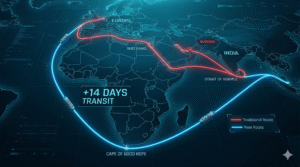
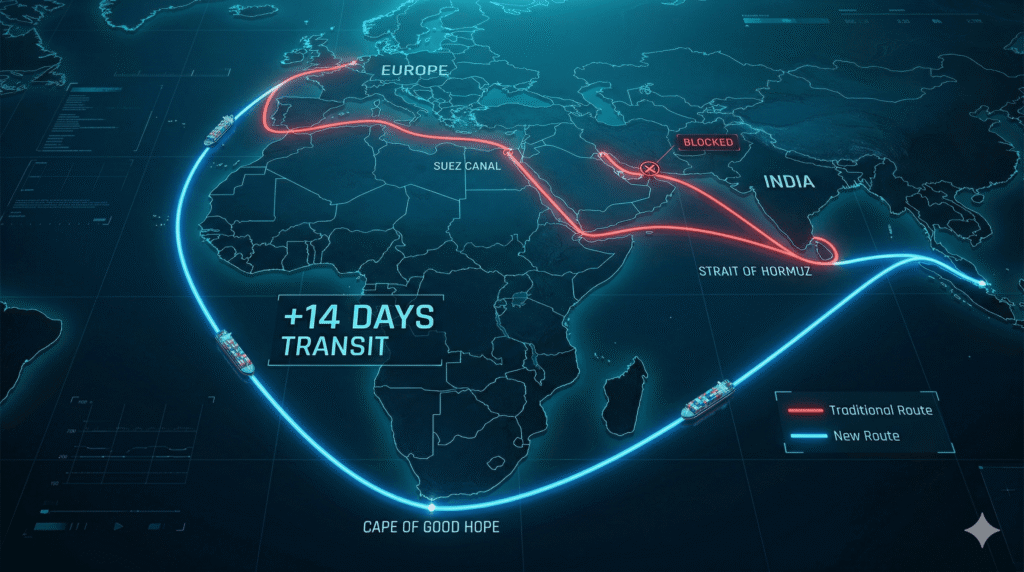
For Indian businesses, the reality is stark: vessels are no longer taking the direct route. Instead, they are rerouting around the Cape of Good Hope, adding thousands of miles and significant delays to every shipment.
This isn’t just a logistics headache; it is a fundamental shift in how we calculate the cost of doing business. If you are importing raw materials or exporting finished goods, the “old” timelines and budgets no longer apply.
👉 Also Read: How India Navigates the West Asia Conflict Impact
What is the Cape of Good Hope Rerouting?
The Cape of Good Hope rerouting is a maritime strategy where vessels avoid the Strait of Hormuz and the Red Sea, choosing instead to sail around the southern tip of Africa.
This detour is essential for vessel safety during periods of high geopolitical conflict. However, it bypasses the primary shortcut between Asia and Europe, fundamentally altering global trade lanes.
By choosing this path, ships must travel an additional 3,500 to 6,000 nautical miles depending on their destination. For an Indian exporter, this adds roughly 10 to 14 days of extra sailing time.
Example: A container traveling from Nhava Sheva to Rotterdam that previously took 24 days may now take upwards of 38 days, delaying inventory turnover and increasing fuel consumption.
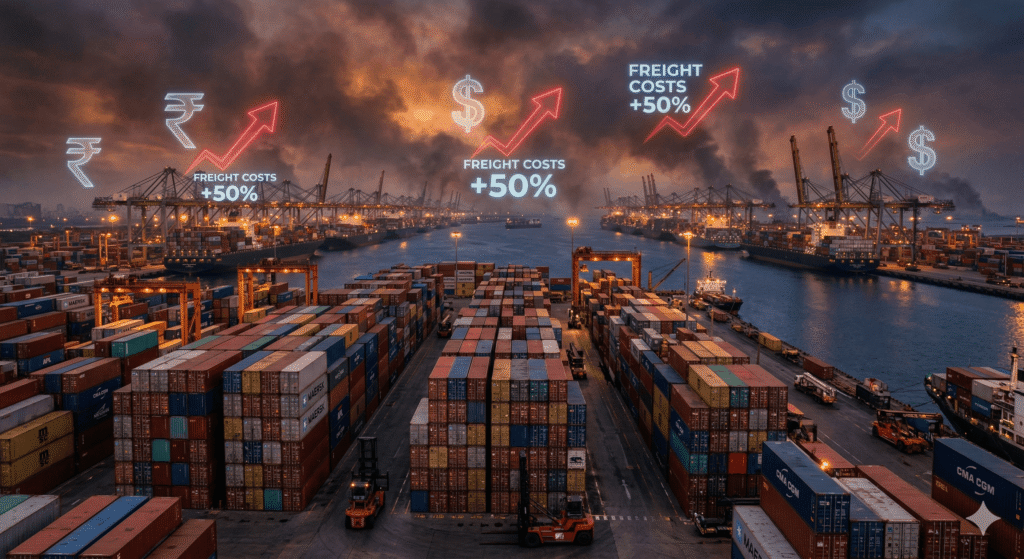
Why are Freight Costs Surging by 50%?
Freight costs have skyrocketed because the longer route demands more fuel, more crew hours, and higher insurance premiums.
When ships take the long way around Africa, the global “effective capacity” of the shipping fleet drops. Because each journey takes longer, there are fewer ships available at any given time to pick up new cargo.
This scarcity of space, combined with the massive increase in operational overhead for carriers, has forced base freight rates up by 30% to 50% on key Indian trade routes.
Example: If a standard 40ft container (FEU) previously cost $3,000 to ship to Europe, businesses are now seeing quotes closer to $4,500 before any additional surcharges are applied.
👉 Also Read: India-US Trade Deal 2026 Explained
What are Emergency Conflict Surcharges (ECS)?
Emergency Conflict Surcharges (ECS) are temporary fees levied by shipping lines to cover the extraordinary costs of operating during a geopolitical crisis.
These charges are separate from your base freight and are designed to offset the high cost of War Risk Insurance and the extra fuel burned during the Cape of Good Hope detour.
Currently, these surcharges are ranging between $2,000 and $4,000 per container. For low-margin goods, these surcharges can sometimes exceed the value of the profit margin on the cargo itself.
How is the Hormuz Crisis Impacting Indian Auto Components?
The Indian automotive component sector is one of the hardest-hit industries due to its reliance on “Just-in-Time” delivery schedules.
This sector exports over $21 billion annually. Because many auto parts are heavy and move via sea, the 40% spike in logistics costs is making Indian parts more expensive in global markets.
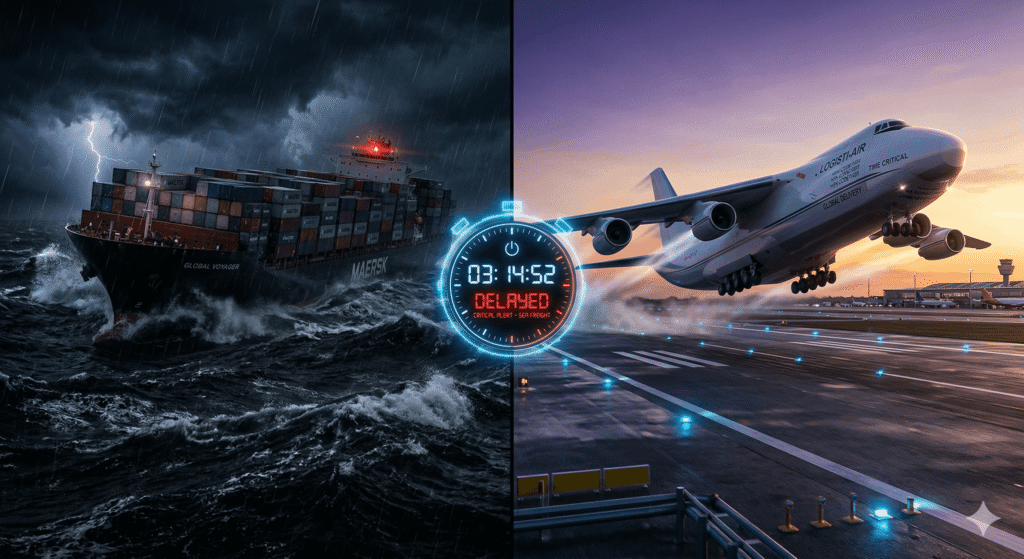
Beyond the cost, the 14-day delay is disrupting assembly lines in Europe and the US that rely on Indian-made components. This puts Indian suppliers at risk of being replaced by more localized competitors.
Example: A transmission manufacturer in Pune may find their European buyer looking for a Turkish supplier simply because the transit time from India has become too unpredictable.